A high-growth enterprise rapidly deploys generative AI tools to boost productivity. Within six months, employees inadvertently paste proprietary IP and PII into unmonitored LLMs, and a subsequent data exposure turns “innovation” into a boardroom crisis.
Scenarios like this have become common because enterprise AI has evolved from isolated productivity tools into systems that support business processes, automate decisions and act on behalf of employees. The risk is therefore not limited to AI itself but extends to inconsistent governance. A single employee using AI without oversight presents a localized risk, whereas an organization allowing every department to adopt AI differently creates an enterprise-wide governance problem.
Just a handful of organizations distinguish between an AI governance framework and the operating model that enforces it. Mature organizations treat governance as both a strategic decision and an operating model. This article explores the operating model behind enterprise AI governance, from how governance programs should be introduced and matured to how Microsoft technologies operationalize governance in practice.
What Enterprise AI Governance Actually Means
Enterprise AI governance establishes the structure that allows AI to operate safely across the business. It defines how AI systems are evaluated before deployment, managed in production and held to security, compliance and business requirements over time.
That structure sits alongside two disciplines the enterprise already knows well: data governance and IT governance. Data governance establishes how information is classified, protected, stored and shared, while IT governance directs how technology investments are planned, managed and aligned with business objectives.
AI governance builds on both. It governs how AI systems access enterprise data, how they make or support decisions, what actions they are permitted to perform and how those decisions remain secure, accountable and aligned with organizational policy over time.
It also behaves differently from the cybersecurity programs most enterprises already run. Traditional cybersecurity operates against relatively fixed threats and predefined controls, whereas AI governance is highly dependent on user interactions and organizational context. Requirements can change every month or every six months as AI usage evolves, and a risk in one organization may not be a risk in another because regulatory obligations, business processes and data sensitivity vary. There is no hard-coded baseline to deploy once and forget. Governance requires continuous tuning based on how people actually use AI.
As organizations expand their use of AI, governance extends beyond individual models to copilots, AI agents, custom applications, third-party services and the business processes they support. Every AI capability introduced into the environment becomes part of the organization’s governance responsibility, and that responsibility runs throughout the AI lifecycle, connecting users, workflows and technology.
Enterprise AI governance hence works as an operational capability rather than another technology stack, and building that capability starts with knowing what you are governing.
Assess AI Maturity and Risk Profile
An AI maturity assessment begins by mapping the attack surface and identifying where AI operates across the organization. That includes sanctioned copilots, internally developed AI applications, third-party services, AI agents and unsanctioned tools adopted by individual teams. Once the AI estate has been identified, governance controls should be measured against established frameworks such as the NIST AI Risk Management Framework and ISO/IEC 42001.
A practical assessment does not need hundreds of questions and endless workshops. Four domains cover the ground that matters.
- Data: identifies where sensitive information lives.
- Identity: establishes who has access to what and whether that access is justified.
- Applications: discovers which AI tools are already being used and determines what should be allowed or blocked.
- Governance: evaluates policy gaps, monitoring gaps and the controls already in place.
Two of those domains deserve day-one attention. Sensitive data discovery should happen before anything else, because the primary purpose of AI governance and DLP is protecting sensitive information from unintended exposure. Non-disclosable documents, highly confidential SharePoint sites and restricted repositories need to be identified upfront and excluded from AI access where appropriate. It is equally important to understand which AI tools employees are already using, since existing usage patterns determine what governance controls, policies and guardrails are actually required.
The single biggest thing organizations overlook at this stage is oversharing and data exposure through existing permissions. Users inherit access to SharePoint sites, documents and Teams channels that was granted years ago and no longer serves a business purpose. Many employees do not even know they still have access to certain content, and IT teams often lack complete visibility into who can access what. AI tools can only work with the access already available in the environment, which means legacy permissions that were never cleaned up suddenly surface sensitive information through AI experiences. More than 80% of organizations have some form of excessive access or data exposure issue when they begin AI governance assessments, yet most focus on prompts, user behavior and AI policies while overlooking the underlying access model.
A common assessment exercise we adopt is “Everyone Except External Users” permissions that have been inherited across the environment, since new SharePoint sites frequently inherit broad access settings that expose more content than intended. These reviews need to happen before governance policies are deployed. Organizations that skip them typically discover the problem only after enforcement begins and existing workflows start to break, with user complaints and IT support tickets serving as the first sign that excessive access existed all along.
The assessment also sets the baseline that every initiative inherits. Every AI project should meet the same minimum security requirements before deployment, with identity controls, conditional access, data classification, information protection and approved integration standards establishing the operating boundaries within which AI can be adopted. Microsoft Entra and Microsoft Purview provide much of this foundation by governing access to AI systems and controlling how enterprise data is protected.
- Related resource: AI Agent Governance: A Framework for Enterprise Control
Build the Enterprise AI Governance Operating Model
With that baseline in place, the operating model itself comes down to four elements:
- The people responsible for each governance decision
- The process that makes those decisions repeatable
- The policies that set the conditions for safe adoption
- The technology stack that translates governance into control
Every AI initiative requires clearly defined ownership before work begins, and that ownership should never sit exclusively with the security team. Business owners are responsible for the solution’s intended outcome and its continued alignment with organizational objectives. Security teams evaluate technical risk and define the controls required to protect enterprise systems and data, while compliance and legal teams assess regulatory obligations, contribute to fairness reviews, bias management, transparency requirements and human oversight.
Data owners determine how enterprise information can be used within AI workloads. End users belong in this model too, because success depends as much on user participation as it does on technical enforcement.
Governance then becomes repeatable when every AI initiative follows the same operational process. A governance workflow should begin with a clearly defined business objective, then proceed through risk assessment, data review, security validation and governance approval. Once deployed, the solution should enter an ongoing review cycle that evaluates changes in risk, business requirements and regulatory obligations.
That process has to leave room for variation, because AI governance is highly malleable and adapts to different departments, workflows and use cases. Sales, marketing, operations and IT teams often require different governance approaches. Some controls are hard no’s, but many governance decisions require balancing productivity and risk. Controls that are too rigid will break business processes, while controls that are too loose will fail to reduce risk.
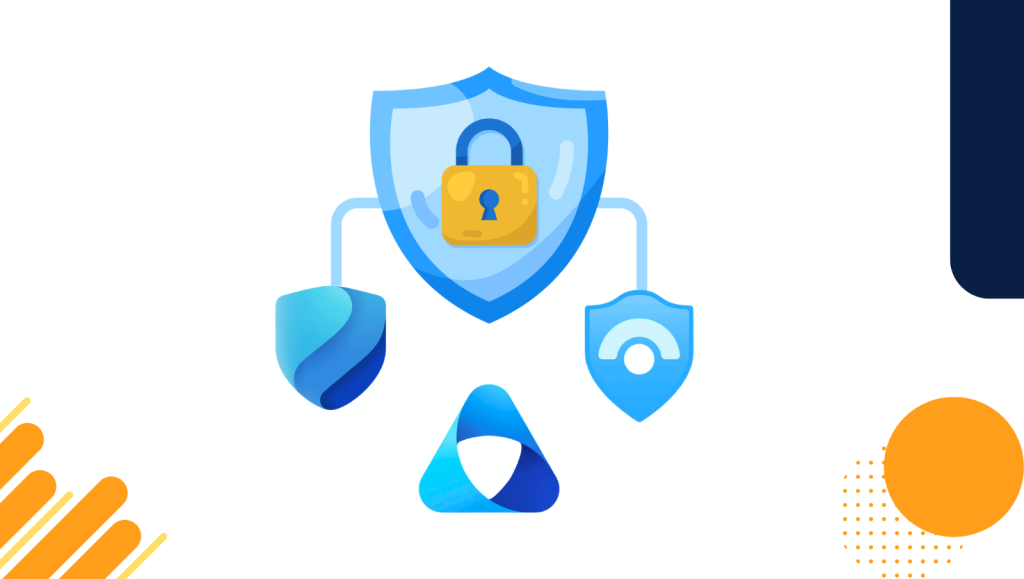
Policies establish the conditions under which AI can be adopted safely, but the operating model only becomes effective when governance decisions are enforced through the underlying technology. In Microsoft environments, these capabilities are delivered through Entra, Purview, Defender and Sentinel.
Operationalize Governance with Microsoft
Bringing those platforms into the operating model depends less on the tools themselves and more on how they are applied. Security controls such as identity protection, data classification and threat detection should be applied holistically as part of the governance model rather than bolted on independently.
Every governance decision begins with identity. Before users or AI agents can interact with enterprise systems, organizations need to determine who should have access, what they should be allowed to do and under what conditions that access should be granted.
Microsoft Entra provides the controls to enforce those decisions through Conditional Access, least-privilege permissions, identity governance and access reviews. Conditional Access should be established from the outset, alongside admin consent workflows that prevent users from introducing unapproved AI applications, plugins or extensions into the tenant. Access cleanup remains a foundational requirement even after governance controls are implemented, which includes reviewing the “Everyone Except External Users” group and removing it from sensitive locations where broad access is not required.
From there, Microsoft Purview keeps that information in check through sensitivity labels, Data Loss Prevention policies, information protection and data lifecycle management, ensuring AI workloads process information in accordance with organizational policies and regulatory requirements.
Beyond identity and data, organizations also need continuous visibility into the risks surrounding AI-enabled workloads. Microsoft Defender helps identify vulnerabilities, detect suspicious activity and monitor AI-related security events across endpoints, identities, cloud workloads and applications. Defender for Cloud Apps plays a particular role here, continuously discovering new AI tools as they appear in the environment and monitoring AI-related activity through AI-focused security posture management capabilities.
Governance ultimately depends on the ability to observe activity across the environment and respond when policies are not being followed. Microsoft Sentinel brings together security telemetry from across the Microsoft ecosystem, allowing organizations to correlate events, investigate incidents and maintain an auditable record of governance activities.
- Related resource: Privileged Identity Management & How to Enforce it With Microsoft Entra
Scale Governance Through Automation
Governance maturity is rarely fully realized on day one, and the progression from manual to automated governance is driven more by operational capability than by any single technology feature.
That capability builds in a consistent sequence.
- Discovery comes first, building an application inventory and a sensitive data inventory alongside permission reviews and oversharing assessments.
- Data protection follows through sensitivity labels, classification, DLP policies and retention controls.
- Identity controls then define who should have access through Conditional Access, access reviews and privileged access management.
- AI visibility comes next through tools that monitor AI adoption and AI-related activity.
- User adoption follows through adoption initiatives, training sessions, user guides and workflow education.
- Continuous governance closes the sequence with automated audits, reporting, monitoring and ongoing policy improvements.
The adoption stage deserves more weight than it usually gets, because governance controls significantly change how people work. Employees lose access to personal AI tools and third-party platforms they previously used as the organization standardizes on approved corporate AI services. Sensitivity labels limit how content is shared, and DLP policies restrict copying, pasting or moving data between systems. The biggest frustration is usually workflow disruption rather than disagreement with governance itself, since adoption challenges are tied to changes in long-standing habits and work practices. Training and workflow education absorb much of that friction before it turns into resistance.
Reviews that once involved a handful of AI projects must eventually support dozens or even hundreds of systems operating across different business units, so automation should allow governance teams to apply the same standards consistently without increasing administrative overhead.
That scale is also where the business value becomes measurable. Risk reduction is one of the most straightforward ways to demonstrate it, since governance initiatives reduce the likelihood of data exposure and security incidents. Compliance is another major driver, allowing organizations to align with Microsoft security standards, ISO requirements, SOC 2 requirements and other governance frameworks. Well-governed AI adoption also improves productivity, with teams spending less time on approvals, repetitive reviews and administrative tasks.
Scaling AI with confidence comes down to an organization’s ability to support adoption without compromising security, compliance or operational control. New AI capabilities, changing regulations and emerging security risks all influence how governance should be applied, and regular governance reviews allow organizations to refine policies, strengthen operational processes and introduce additional controls where necessary.
Conclusion: Embed Governance Into Everyday Operations
AI governance becomes meaningful when it is embedded into everyday operations, where every new AI capability follows the same decision-making process, operates within the same security boundaries and remains subject to ongoing oversight throughout its lifecycle.
Many organizations already have the foundation required to govern AI effectively. The challenge is to bring these capabilities together under a single governance model so that every AI workload adheres to the same operational standards.
Our approach at CrucialLogics entails assessing governance maturity, identifying security and governance gaps and designing Microsoft-native governance frameworks that align with how your business operates. Whether you’re preparing for your first enterprise AI deployment or enhancing governance across existing AI workloads, we can help. To get started, review our AI governance and training services or threat protection workshop to learn how to put Microsoft Security tools to work for you.